
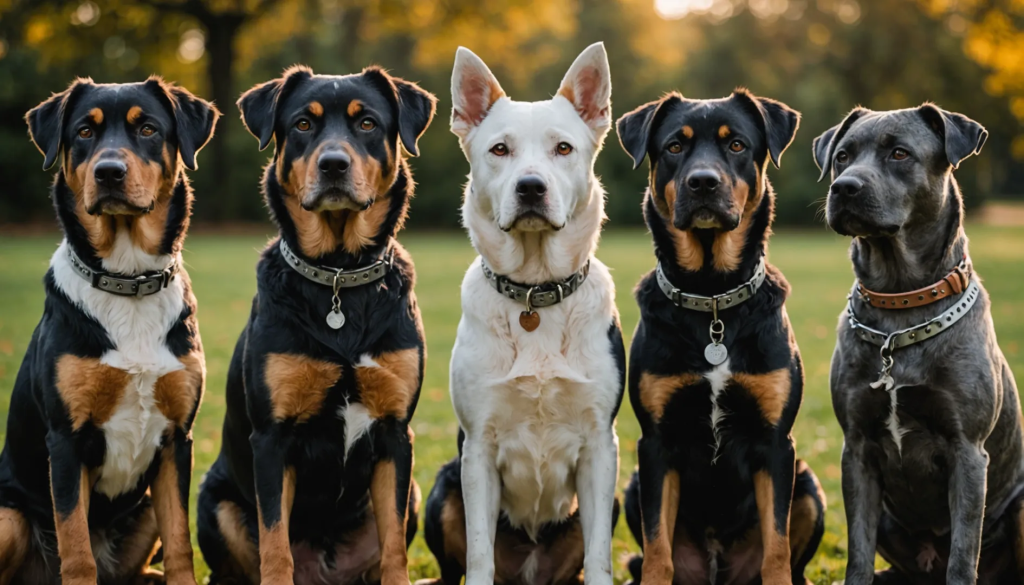
Choosing the perfect collar isn’t simply about material, color, or clip style—it’s about fit. And one of the biggest factors in getting a good fit is your dog’s breed. Different breeds have different neck sizes, chest builds, coat types, and behaviors—all of which impact what kind of collar will work best for them. For dog collar manufacturers and retailers, understanding these breed-specific differences can improve product design, reduce returns, and increase customer satisfaction. Below, we explore how breed characteristics affect collar size and what pet businesses need to know to get it right.
Why Breed Matters for Collar Fit
When considering collar size, here are the main breed-related factors:
- Neck circumference / shape: Some breeds have thick, muscular necks (e.g. bulldogs, mastiffs) while others have slim, delicate necks (e.g. greyhounds, toy breeds).
- Head size vs neck size: Some dogs have necks smaller than their heads (e.g. some sight-hounds), which means the collar must be adjusted so it can go over the head but still fit securely.
- Coat type or fur thickness: Long, fluffy or thick coats can hide the actual size of the neck. A collar that seems loose over a thick coat may in fact be tight or vice versa.
- Growth / age / proportion: Puppies of a large breed grow quickly; they may need adjustable collars or multiple size increments. Also, breeds with long backs (like Dachshunds or Corgis) may put more strain on collars if they pull, so strong materials and correct fit matter more.
- Behavior and strength: Strong pullers or active breeds need collars that are sturdy and have room for adjustment because any pulling or jerking will put more stress on the collar and neck area.
Understanding these breed differences helps dog collar manufacturers design collars that fit well across a variety of dogs.
Breed-Based Collar Size Guidelines
Here are typical collar size ranges by dog breed classes, with examples, to illustrate how breed type influences sizing. These are average guidelines; individual dogs may vary.
| Breed / Group | Typical Neck Size (inches) | Collar Size Label (XS / S / M / L / XL etc.) | Special Considerations |
| Toy & Small Breeds(Chihuahua, Pomeranian, Toy Poodle, Yorkie) | ~8-12 in (20-30 cm) | Extra-Small (XS) to Small (S) | Often have delicate throats; soft, lightweight collars are better. Buckles must be easy to open/close. Thick coats may hide measurements. |
| Medium Breeds(Beagle, Cocker Spaniel, French Bulldog) | ~12-18 in (30-46 cm) | Small (S) to Medium (M) | Need collars that are durable but also allow some padding or wider straps to distribute pressure. |
| Long-Back Breeds(Dachshunds, Corgis) | ~12-16 in (30-41 cm) | Usually Small to Medium, depending on size | Due to their long backs, collars need to avoid causing strain; design should prevent slipping or pulling pressure digging into trachea or cervical vertebrae. |
| Large / Active Breeds(Labrador Retrievers, German Shepherds, Boxers) | ~16-26 in (41-66 cm) | Medium (M) to Large (L) or even XL | Need collars with strong hardware and adjustment range. Heavy duty materials are better. Also consider width; wider collars distribute force better. |
| Giant Breeds(Great Danes, Mastiffs) | ~20-30+ in (51-76+ cm) | Large (L) to Extra Large (XL) | Must ensure collar goes over the head if neckline is small. Wider, sturdy collars with strong buckles and stitching. Also account for drooling, sensitive skin in wrinkles. |
Sources such as Pawsonify provide collar size guides by breed that show Corgis (both Cardigan & Pembroke) typically falling in the 14-16 in / Medium range. Pawsonify+2Mimi Green+2
Measuring Right: The Key Steps
To make breed-based sizing accurate, the user (or your customer) needs to follow these steps:
- Use a flexible tape measure (or string if you don’t have one).
- Measure around the widest part of the neck where the collar will sit—usually just below the ears.
- Ensure the tape is snug but not tight—you should be able to slip two fingers between the collar and the neck. This ensures comfort and prevents choking. Sources recommend this often. Coastal Pet Products+2GoTags+2
- Check the dog standing upright, head in natural position—all so you capture natural neck shape.
- Adjustable collar sizing: Buy collars with sizing ranges rather than fixed sizes when possible (e.g. “12-18 inches” vs “size Medium”) so there is flexibility. Puppies need room to grow.
How Dog Collar Manufacturers Should Incorporate Breed Data
For a dog collar manufacturer, using breed-specific sizing data in your design and marketing helps create better fitting products and happier customers.
Here are suggestions:
- Size ranges with breed examples: On your product pages, list not just “Medium collar 14-18 in” but also “fits breeds such as Beagle, Corgi, French Bulldog.” This helps customers orient themselves.
- Adjustment features: More holes, sliders, buckles that allow small adjustments. This helps cover variance among dogs even within the same breed.
- Material and design suited to breed traits (coat type, neck shape, strength). E.g., wide padded collars for dogs with thick fur that gets matted, or collars with clip-type hardware easier for small breeds to handle.
- Testing for strength and durability in larger or heavy dogs. Multi-layer materials, reinforced stitching. Perhaps even scaling up hardware for breeds with thick necks or strong pulling behavior.
- Visual guides / sizing charts including breed examples. On your site (such as on OkeyPets), include a collar sizing chart by breed. This reduces returns and increases customer trust.
Breed Specific Considerations in Collar Material & Style
Besides sizing, breed also influences what material or style might be more appropriate:
- Thick coat breeds (e.g., Huskies, Samoyeds): Collars should be wide enough to prevent straps digging in through fur; fabrics that are soft; avoid collars that are too rigid.
- Short-neck breeds (e.g., Pugs, Bulldogs): Neck is shorter; ensure collar width and hardware won’t irritate throat; possibly consider collars that sit slightly higher on neck but with soft padding.
- Long, slender neck breeds (e.g., Greyhounds, Afghan Hounds): Collars need to go over the head; often need martingale collars or wider buckles so they don’t slip off.
- Active water dogs (e.g., Retrievers, Spaniels): Materials that dry quickly; rust-resistant hardware; possibly collars designed not to absorb water.
- Small / toy breeds: Lightweight materials; smaller, gentler buckles; style and appearance often more in demand, but safety and fit should not be compromised.
How Retailers Like OkeyPets Can Use This Info
For pet retailers such as OkeyPets, incorporating this breed-based sizing knowledge can be a competitive advantage. Here are things retailers/manufacturers should do:
- Provide detailed breed to size charts on product pages or in a sizing guide section.
- Offer collars with adjustable size ranges rather than fixed increments, to accommodate variance within breed.
- Use photographs showing collars on dogs of different breeds with measurements.
- Include recommendations for materials/styles based on breed (e.g., recommend padded leather for thick coats, rust-proof metal bits for water breeds).
- Include “dog collar manufacturer” credentials in marketing — e.g., “XXX by [Your Company] – designed by experts and manufacturers who understand breed variations.” This helps in trust building and SEO.
Conclusion
Different breeds significantly affect what collar size is comfortable, safe, and effective. Breed traits such as neck girth, head size, fur thickness, growth rate, and behavior all influence the ideal collar fit.
For a dog collar manufacturer, paying attention to these breed-specific details leads to better product design, fewer returns, happier dogs, and more satisfied pet owners. Retailers like OkeyPets that provide breed-based sizing guides, clear measurement instructions, and adjustable collars will stand out in the market.
Ultimately, a collar that fits well not only improves comfort but promotes safety, reduces irritation, and makes walks and daily wear more enjoyable—for both dog and owner.